How to Price your paintings
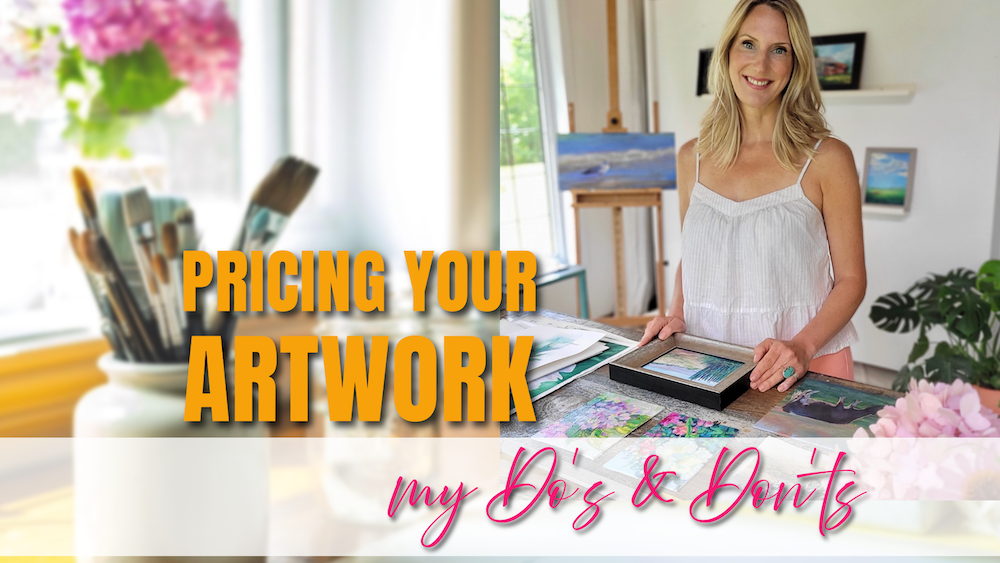
Discover practical art pricing formulas for new and emerging artists. Learn how to price your artwork consistently using a scalable square-inch method, avoid common pricing mistakes, and build confidence with repeat collectors.
How to Price Your Artwork: A Scalable Guide for Success
By Crystal Beshara
The Core Strategy
Pricing your artwork is one of the most common hurdles for new and emerging artists. You want to get paid fairly for your talent and vision, but you don't want to price yourself out of the market. The key to long-term success with collectors is absolute consistency.
By using a scalable system, your repeat buyers will always understand your pricing structure, allowing them to anticipate and budget for your next release with confidence.
The Formulas
1. The Scalable PSQI Formula
Consider charging your work per square inch (PSQI) . This is a nice and easily scalable solution.
The sum of the width x height ie: 11” x 14” = 154
Therefore an 11” x 14” painting at $2.00 PSQI = 154 x $2.00 = $308
As the size of the work gets larger, you may drop the base price or eliminate it altogether, and you may even consider lowering your price per square inch… otherwise very large paintings can become extremely unaffordable
2. The Base Price Add-on
To ensure smaller pieces still cover your setup time, framing, and administrative work, add a Base Price (BP) to smaller dimensions:
You may want to consider adding a base price to smaller works ie: $200 for any work under the size of say, 8” x 10”
So your new formula for an 8” x 10” (80 square inches) painting at $2.00 PSQI would be 80" x $2.00 = $160 + Base Price of $200 TOTAL price = $360.00
Pricing Do's & Don'ts
The Don'ts
- Don't charge by time alone. Some pieces take days of technical struggle, while others flow effortlessly as if by magic. Pricing strictly by the hour creates confusing inconsistencies for your collectors.
- Don't justify material costs. Breaking down the price of your paints, gold leaf, or fine paper to a buyer is unprofessional. Collectors buy with their hearts—they care about the final visual impact, not a grocery list of supplies.
- Don't price based on emotion. If you love a piece too much to let it go, mark it as NFS (Not For Sale) or offer a limited-edition print instead.
The Do's
- Do research your local market. Visit regional art fairs and examine artists at a similar career stage to find a realistic baseline for your area.
- Do respect working artists. Never corner an artist at an exhibition booth to pull out your phone and ask for a portfolio critique or pricing advice. Take a business card and reach out via email or look into their workshops later.
- Do evaluate your credentials. Factors like juried shows, prestigious awards, elected memberships in art associations, and your Google visibility all validate steady price increases.
- Do anticipate annual growth. A steady 5% annual increase is standard and healthy for an established, active fine artist.
🎨 Studio Note
Remember that your art career is a marathon, not a sprint. Price for the market you have right now while leaving room for your value to grow organically year over year. Keep records of every sale to establish a strong provenance and history for your brand.
Artful Living with Crystal Beshara Fine Art, Workshops & Creative Education crystalbeshara.com | Scan the QR code on your printout to access our full video tutorial library.